


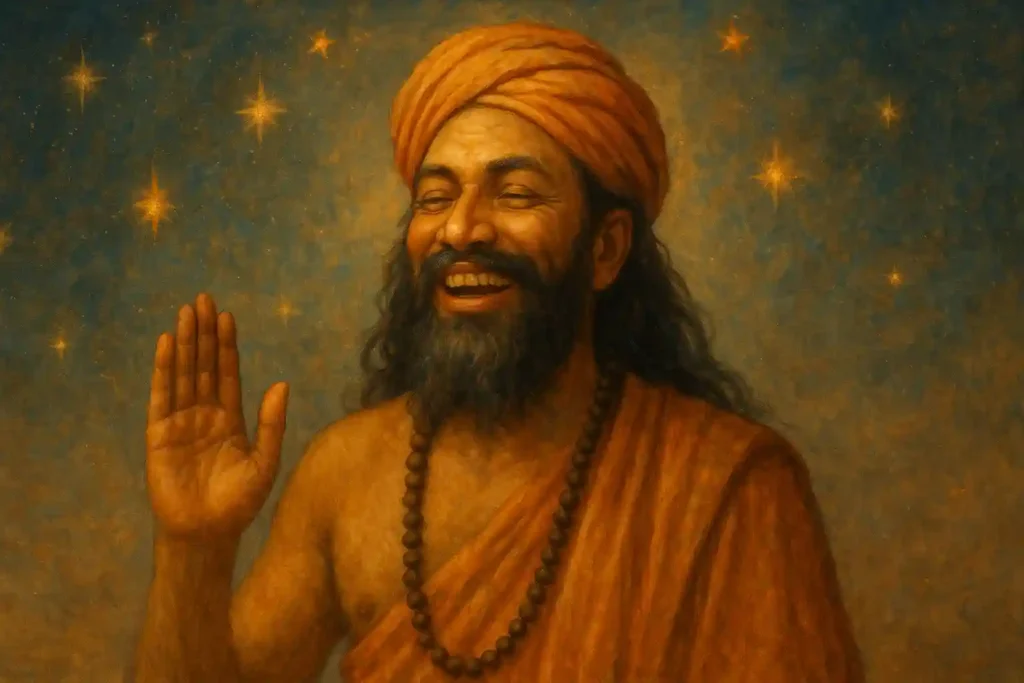
There have been many saints, the entire sky is filled with the shining stars of saints, but Malukdas cannot be compared to anyone else. Malukdas is incomparable. His uniqueness lies in his carefreeness, his joy, his unconsciousness. The name Maluk has become synonymous with joy. There is something intoxicating about this name itself. Just repeating it makes you dance inside.
Osho Birth: Saint Malukdas Sahib was born to Lala Sundardas Khatri on the fifth day of the dark fortnight of Vaishakh month, 1574, in a village called Kara in the present-day Kaushambi (old Allahabad) district. Kara is located on the banks of the Ganges, approximately 36 miles northwest of Prayag. His grandfather’s name was Jaharmal, and his great-grandfather’s name was Veniram. Malukdas Sahib was affectionately called “Mallu” in his childhood.
He had three brothers: Harishchandra, Shringar and Ramchandra.
Education: There is no evidence that Malukdas ji was highly educated.
He received whatever education he could through self-study, spiritual company, and travel. It is said that his father, Sundardas, sent him to school at the age of five. The school teacher assigned him the task of writing the alphabet on a slate. The young boy, Maluk, wrote a Sakhi for each letter of the alphabet. Everyone was astonished by his God-given talent.
It is said that Maluk Sahib was married at the age of twelve. Even after marriage, he remained uninterested in family life. It is also said that he had a daughter. Both his daughter and his wife died at the time of her birth.
Childhood:
Malukdas Sahib had a strange feeling since childhood.It was a habit. If he found a thorn lying on the road, he would leave all his work and remove it. If he found garbage lying somewhere, he would leave all his work and clean it. If his parents or family members sent him for some work, it would take him hours to return, because he would first remove the thorns from the road, clean it and then return after doing the work. Sometimes his mother would send him to buy vegetables early in the morning and he would return in the evening. He would say that mother, a more important work came up than buying vegetables. There were thorns on the road. There was garbage. It was necessary to remove them from the road. This was Malukdas ji’s daily work.
One day, a Sadguru saw this and began following him. He spent the entire day observing this boy’s remarkable lifestyle. Returning in the evening, he told Malukdas’s father, Sundardas, “You are blessed, son! A Sadguru has incarnated in your son.” Sundardas, hitting his head, said, “We are troubled by this Sadguru. He is useless. If you send him for even the smallest task, he spends the entire day. He should have been born a sweeper. We have explained to him in every way, beaten him, and threatened him, but nothing has worked. He just keeps cleaning the roads.” Hearing this, the boy Malukdas said, “I want to do this work for the rest of my life, so I’m practicing.” The Sadguru replied, “That’s not the case. He’s just a little boy, so he’s cleaning the garbage and removing thorns.” When he grows up, he will purify people’s lives and remove the thorns from their knots. This Ajanubahu will either become a Chakravarti emperor or a remarkable enlightened being. It’s not necessary that only those who appear wise are truly wise; sometimes even those who appear foolish can be very wise. It’s not right to consider Malukdas foolish; he has attained something beyond which nothing remains to be attained; all that remains is to recognize it.
Interest in company of sages:
Father Sundardas fed up with child Malukdas.They had come, because whenever a saint or sage arrived, Malukdas would leave everything else and join them. He would not return home but would devote himself to serving them. If a saint visited his house, he would give them generous donations. Sundardas ji had a blanket business. Malukdas ji would distribute blankets to saints and sages. He would loot. If he saw someone in the cold, he would immediately give them a blanket. If his father had refused to let him take a blanket, he would steal one from his own house and give it to the sadhus, but he could not see anyone in trouble. If a sadhu did not have an umbrella and it was a rainy day, he would distribute umbrellas to them. Even if he had to steal from his own house for this. On this, the great man Osho says, ‘Sin and virtue are not just acts. There are hidden intentions behind sin and virtue. Sometimes virtue can also be sin, sometimes sin can also be virtue. The mathematics of life is like a puzzle… it is not a straight line. Everything depends on the inner intention.’
Strong faith in God:
It is a popular belief that Malukdas ji He was always gentle, generous, kind, and a devotee of the saints, but he lacked a strong faith in God. It is said that a saint came and stayed in his village, Kada. The villagers visited the saint every morning and evening, listening to the Ramayana from him. One day, Malukdas also arrived. The saint was telling people that Lord Rama is the world’s greatest giver, providing food for the hungry, clothes for the naked, and shelter for the homeless. Malukdas disagreed with the saint’s words. He asked, “Excuse me, if I sit quietly, chanting Rama’s name, and not working, will Rama still provide food?” The saint assured him. Maluk asked again, “What if I sit alone in the dense forest?” The saint firmly replied, “I will still provide food.” This statement struck Maluk. He went into the dense forest and climbed atop a dense tree. All around were tall trees, thorny bushes, and distant mountains. The forest stretched up to 100 feet. Evening fell, and darkness began to spread, but Malukdas found no food. He remained sitting in the tree all night.
The next day, amidst the utter silence, they heard the sound of horses’ hooves. They sat up alert. They saw that royal officials in bright clothes were approaching. They all came and sat under the same tree. One official was taking a box of food from his bag for dinner when suddenly a lion roared. Hearing the roar, the horses spooked and ran away. The officials looked at each other in shock, then they too abandoned their food and ran. Malukdas had been watching all this silently from atop the tree. He waited for the lion. But what happened? The lion roared and went away in the other direction. Malukdas thought that Ram had heard him, otherwise how could food reach this dense forest? Meanwhile, the third quarter of the day had begun. By the time Malukdas got down and was eating, a group of bandits passed by. They were stunned to see food in the form of various dishes in silver vessels under the tree. The bandits said to the leader, “This is a wonderful miracle of God.” For us hungry people, food has been stored in beautiful containers in this desolate forest. Come, let’s eat first. A suspicious bandit cautioned, “But Sir, it seems strange to find food in this desolate forest. It could be poisoned. I suspect the person who brought the food must be hiding somewhere nearby. Let’s find him first.”
On the Sardar’s orders, the bandits began searching everywhere. Then one bandit spotted Malukdas. He informed the Sardar. The Sardar took his head . When he looked at Malukdas, his eyes glowed red like embers. He said, “You wicked man! You’re sitting up there, poisoned, with the food. Come down.” Hearing the chieftain’s rebuke, Malukdas was frightened. But he didn’t come down. From there, he said, “Why are you blaming me unnecessarily? There’s no poison in the food.” Another bandit said, “He’s lying. First, climb the tree and feed him. The truth will be revealed immediately.” Quickly, three or four bandits grabbed the food container, climbed the tree, and, brandishing a knife, forced Malukdas to eat. Malukdas ate. Then, climbing down, he recounted the entire story to the bandits. They released him. After this incident, Malukdas became a staunch devotee of God. Upon reaching the village, he first recited this verse:
“The python does not serve, nor does the bird work. Das Maluka said, Ram is the giver of all.”
Union of Sadhguru and God:
Inside Malukdas Saheb , He had the characteristics of a devotee since childhood. He made Purushottam Ji’s son and renowned Devnath Ji his first guru. His thirst for enlightenment was not completely quenched by his first guru. It is also said that he also received initiation from Murari Swami Ji, as evidenced by the verses of Malukdas Ji. Even after these efforts, his yearning for liberation remained unquenched, and he continued his search for a perfect guru. At the age of 42, Saint Kabir blessed him. He revealed the profound secrets of spiritual practice and led him to samadhi. In the language of devotees, he gave him a vision of God, and in the language of the wise, Malukdas attained enlightenment. During this period, he remained in meditation for two days.He remained in a state of samadhi. After coming out of samadhi, he spontaneously said:
Chant the name of Satguru Kabir in your mind.
Once upon a time, Guru played the flute and the Kalindi arrow.
Gods, men and sages got tired and the river water stopped flowing.
The saints of both religions left Kashi and came to Maghar.
Some buried, some set fire, but could not find the body.
Satguru’s body is free from four stains and is immortal.
Das Maluka says, find your husband Kabir.
Maluk Sahib was already popular. Gradually, his fame spread far and wide. Even people of other religions were drawn to his sanctity. Kings and princes, including the Mughal Emperor Aurangzeb, held him in high regard. He was always visited by a stream of devotees seeking spiritual discourse. It is said that Goswami Tulsidas also accepted his hospitality for several days. According to a legend, Lord Rama appeared before him in person.
Maluk Sahib was a karmayogi saint. He possessed a perceptive and eloquent voice. He traveled throughout the country, spreading the message of Vaishnavism and Rasopasana. Among these journeys, his visits to Puri, Delhi, and Kalpi became particularly famous. Overwhelmed by devotion, his sung experiences became popular verses. Even farmers and laborers, who were unfamiliar with the region, embraced his verses. He devoted his entire life to philanthropy, serving the poor and the needy, and alleviating suffering. People of all religions became his disciples.
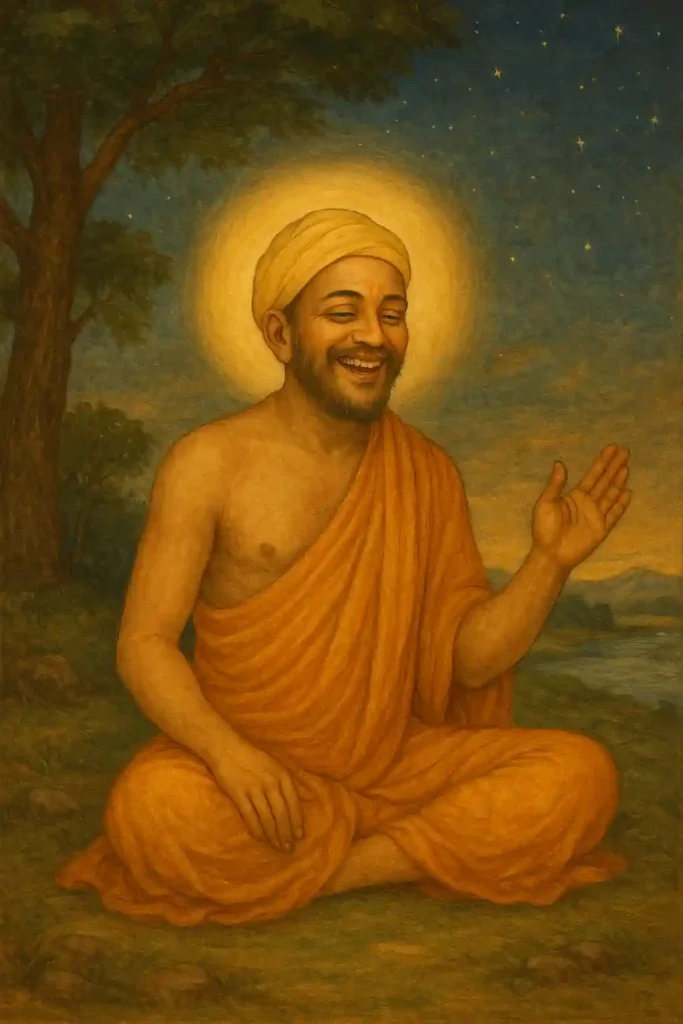
nside Malukdas Saheb , He had the characteristics of a devotee since childhood. He made Purushottam Ji’s son and renowned Devnath Ji his first guru. His thirst for enlightenment was not completely quenched by his first guru. It is also said that he also received initiation from Murari Swami Ji, as evidenced by the verses of Malukdas Ji. Even after these efforts, his yearning for liberation remained unquenched, and he continued his search for a perfect guru. At the age of 42, Saint Kabir blessed him. He revealed the profound secrets of spiritual practice and led him to samadhi. In the language of devotees, he gave him a vision of God, and in the language of the wise, Malukdas attained enlightenment. During this period, he remained in meditation for two days.He remained in a state of samadhi. After coming out of samadhi, he spontaneously said:
Chant the name of Satguru Kabir in your mind.
Once upon a time, Guru played the flute and the Kalindi arrow.
Gods, men and sages got tired and the river water stopped flowing.
The saints of both religions left Kashi and came to Maghar.
Some buried, some set fire, but could not find the body.
Satguru’s body is free from four stains and is immortal.
Das Maluka says, find your husband Kabir.
Maluk Sahib was already popular. Gradually, his fame spread far and wide. Even people of other religions were drawn to his sanctity. Kings and princes, including the Mughal Emperor Aurangzeb, held him in high regard. He was always visited by a stream of devotees seeking spiritual discourse. It is said that Goswami Tulsidas also accepted his hospitality for several days. According to a legend, Lord Rama appeared before him in person.
Maluk Sahib was a karmayogi saint. He possessed a perceptive and eloquent voice. He traveled throughout the country, spreading the message of Vaishnavism and Rasopasana. Among these journeys, his visits to Puri, Delhi, and Kalpi became particularly famous. Overwhelmed by devotion, his sung experiences became popular verses. Even farmers and laborers, who were unfamiliar with the region, embraced his verses. He devoted his entire life to philanthropy, serving the poor and the needy, and alleviating suffering. People of all religions became his disciples.
Miracle: It is said that Malukdas Sahib saved a sinking ship by lifting it above the water and made a bundle of coins float in the Ganga.
Followers: The main centre of Guru Gaddi remained ‘Kada’ Uttar Pradesh, but apart from Uttar Pradesh, your followers are also in Gujarat, Rajasthan, Kabul, Bihar, Nepal and Andhra Pradesh.
Lineage:
After Maluk Sahib, his nephew Ramsnehi, then Krishna Sanehi, Thakurdas, Gopaldas and Kunj Bihari Ji respectively sat on the Guru Gaddi.
Compositions:
21 works are attributed to Malukdas ji. Among them, Ratnakhan, Gyanbodh, Alakhbani, Gurupratap, Purush Vilas, Bhagat Bachhavali, Bhagat Virudavali, Ramaavatar Leela, Sukhsagar, Brajlila, Dhruvacharit, Vibhay Vibhuti, and Dasratna are the most famous.
Departure:
Filled with devotion, Malukdas Sahib continued to perfume Uttar Pradesh and the surrounding areas for a long life of 108 years. Then, in 1682, he left his physical body to merge with the five elements.
It is a popular belief that just before Mahaprasthan, he told the devotees that after bathing Lord Jagannath, where the water falls down from the Panali, my Samadhi should be built there and the leftover flour from the dough that is kneaded to make rotis for offering to Lord Jagannath should be used. Make a thick roti of 100 grams and offer it to this servant. At that time the devotees did not have the courage to make such arrangements in Jagannathpuri. So they placed his mortal remains in a box and offered it to the water god in the river. This box floated to the shore and with someone’s inspiration the arrangements were made as per Malukdas Saheb’s wish. Today his samadhi is situated at the south gate of Lord Jagannath’s temple and the flour kneaded for offering to Jagannath ji is used to make roti from the leftover flour, which is offered to Malukdas Saheb.
The bed and sandals used by him are present at Malukpeeth. Legend has it that Malukdasji meditated in this ashram for many years. This place was a vast forest area, hence the name Vangarh. Santoshdas Khaki is currently the head of this peeth. The centuries-old Radha-Krishna temple established by Malukdasji is located at this very spot. This ashram remains a center of faith, attracting saints and devotees from far and wide.
Courtesy:
- The Saint Tradition of Northern India, Parshuram Chaturvedi 2.
Saint Sudhasar Viyogi Hari 3. Indian saint tradition Baldev Vanshi 4.
History of Hindi Literature Dr. Nagendra 5. India Encyclopedia.

